Artist
Biography
Ramirez Villamizar, Eduardo
Pamplona, Colombia, 1922 — Bogotá, Colombia, 2004
Eduardo Ramírez Villamizar was a pioneering Colombian artist whose work in geometric abstraction and monumental sculpture left a lasting impact on Latin American modern art. His exploration of form, balance, and space was deeply influenced by architecture, pre-Columbian art, and modernist abstraction. Ramírez Villamizar studied architecture, art, and decoration at the Universidad Nacional de Colombia in Bogotá from 1940 to 1946. Initially, his paintings were expressionist and figurative, often addressing social and religious themes. Over time, his style became increasingly abstract, influenced by Cubism and the work of modern European artists. In 1950, he traveled to Paris, where he studied under Jean Dewasne and Edgard Pillet at the Atelier d’Art Abstrait. There, he was exposed to geometric abstraction and formed connections with artists such as Jesús Rafael Soto and Alejandro Otero.
Upon returning to Colombia, he shifted towards geometric compositions and monochromatic reliefs. His murals Composición en ocres (1957) and El Dorado (1958) reflected his interest in architectural integration and indigenous influences. In 1967, Ramírez Villamizar moved to New York, where he began creating freestanding sculptures. His Column (American Bank, 1967) marked his transition to monumental public art. He represented Colombia at the 10th Bienal de São Paulo (1969), earning the second international prize. His large-scale sculptures, such as De Colombia a John Kennedy (Kennedy Center, Washington D.C., 1973), exhibited a dynamic interplay of planes and space. Returning to Colombia in 1974, he continued producing public sculptures, including Nave Espacial (Bogotá, 1978) and works for the 1976 Venice Biennale.
A transformative visit to Machu Picchu in 1983 influenced his later works, leading to a series of sculptures inspired by Inca terraces and landscapes. His later use of rusted iron reflected a philosophical approach to time and material decay. In 1990, the Museo de Arte Moderno Ramírez Villamizar was established in Pamplona, Colombia, cementing his legacy.
His work has been exhibited at the Venice Biennale (1957, 1976), São Paulo Biennial (1958, 1962, 1969), and Havana Biennial (1989) and is held in major collections, including the Museum of Modern Art (New York), the Museo Nacional de Colombia, and the Museum of Fine Arts, Houston.
Works
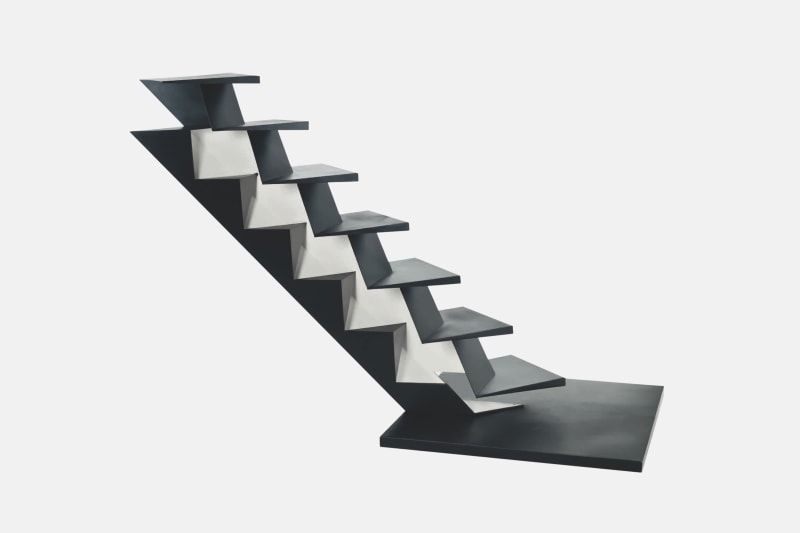
Caracol escalera
Ramirez Villamizar, Eduardo
1979
Painted metal
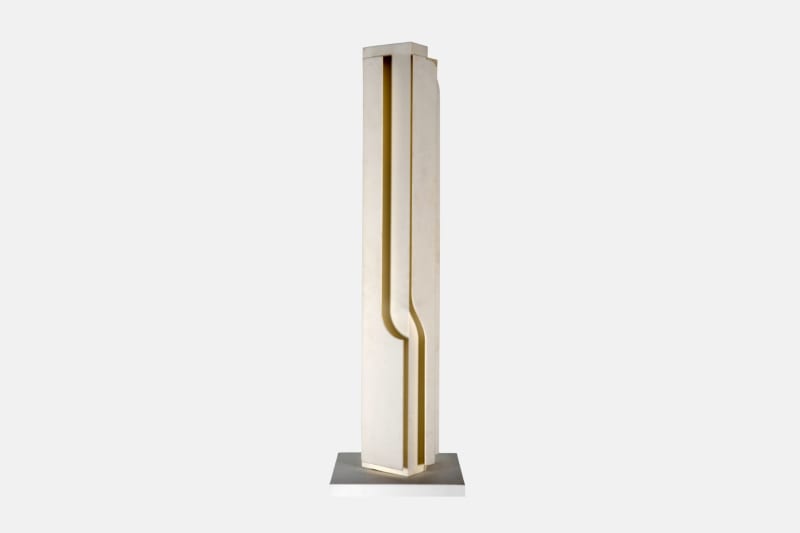
Columna
Ramirez Villamizar, Eduardo
1967
Acrylic
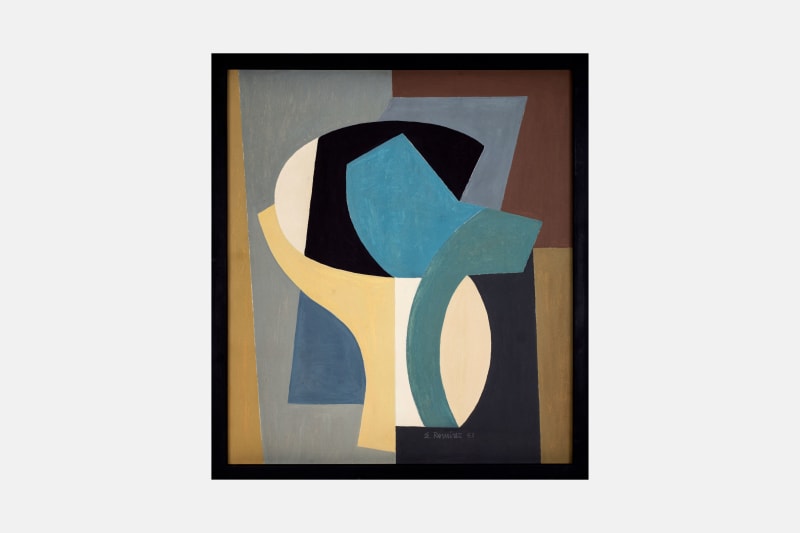
Copa
Ramirez Villamizar, Eduardo
1953
Oil on canvas
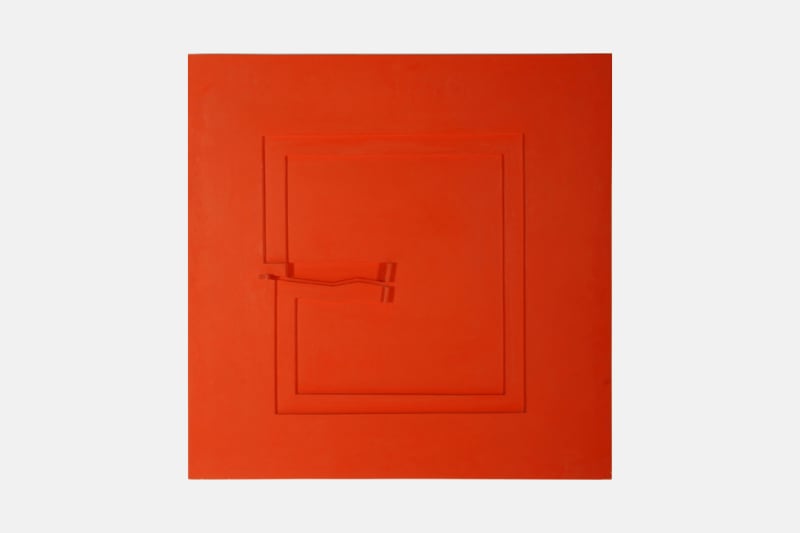
Entrada al Dorado
Ramirez Villamizar, Eduardo
1961
Painted wood relief
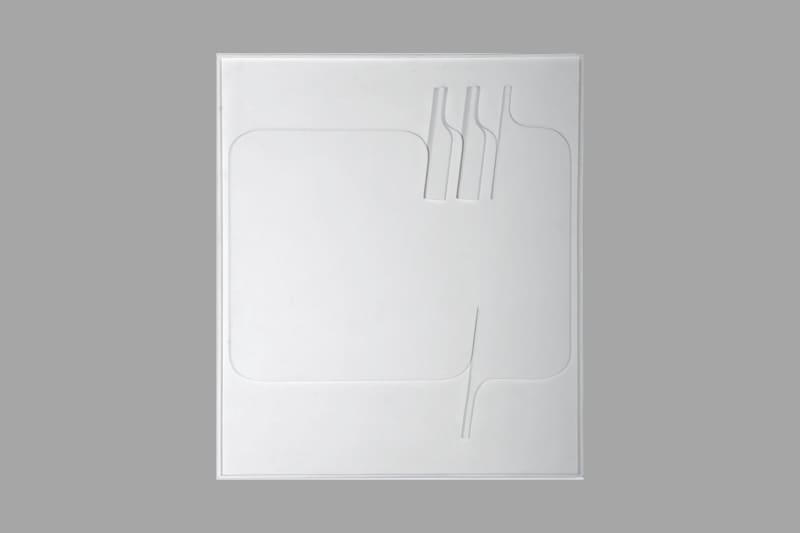
Silent Surface
Ramirez Villamizar, Eduardo
1960
Wood relief